Ask a Naturalist: Evergreens at Gateway Nature Preserve


In wintertime, the weather is cold, the trees are bare, and the wildlife slows down a bit. It is the perfect time to explore the world of evergreens! At Gateway Nature Preserve, you can take a stroll through the forest right in the middle of Winston Salem and explore the diversity of trees our woods offer. It can be a learning experience for both children and adults.
Evergreens offer many benefits to the ecosystem. These trees and shrubs provide year-round food and shelter for fauna. Native evergreens offer beautiful berries and seeds that birds love. They also provide homes for birds, small rodents, and insects. For humans, these trees provide a break from bare trees and a beautiful and waxy year-round foliage.
American Holly- Ilex opaca is a perennial evergreen tree and NC native. It grows usually in dry, moist, and wet soil and it can thrive in sun and part shade. It usually blooms from April-June with white and green flowers. It grows all through the state in the mountains, piedmont, sandhills, and coastal plain. It has an alternate leaf arrangement. The males usually have more flowers than the female and they must be near each other for the female to develop berries. These fruits are eaten by 29 species of birds including robins, cedar waxwings, and bluebirds. The berries are also enjoyed by squirrels, opossums, racoons, bears, and deer. In addition, American holly provides shelter and protective nesting for mockingbirds, robins, and various other birds. Depending on conditions, lichens can also grow on the trunks of American Hollies.
Southern Magnolia- Magnolia grandiflora is an evergreen that keeps most, not all of its leaves year-round. Its leaves are leathery, lustrous dark green, and velvety rusty orange on the underside. These trees bloom from May-June, with some blooms in the summer months. The flowers are sometimes up to 12” in diameter! And produce a strong rich fragrance. It yields fruit that is 3-8” long and attracts various birds including wild turkey. Rabbits and squirrels also enjoy the fruit. In addition, bees benefit from the flowers’ nectar. Magnolias also provide shade and shelter for wildlife year-round. The dense foliage helps reduce soil erosion, while its root system helps to stabilize the soil.
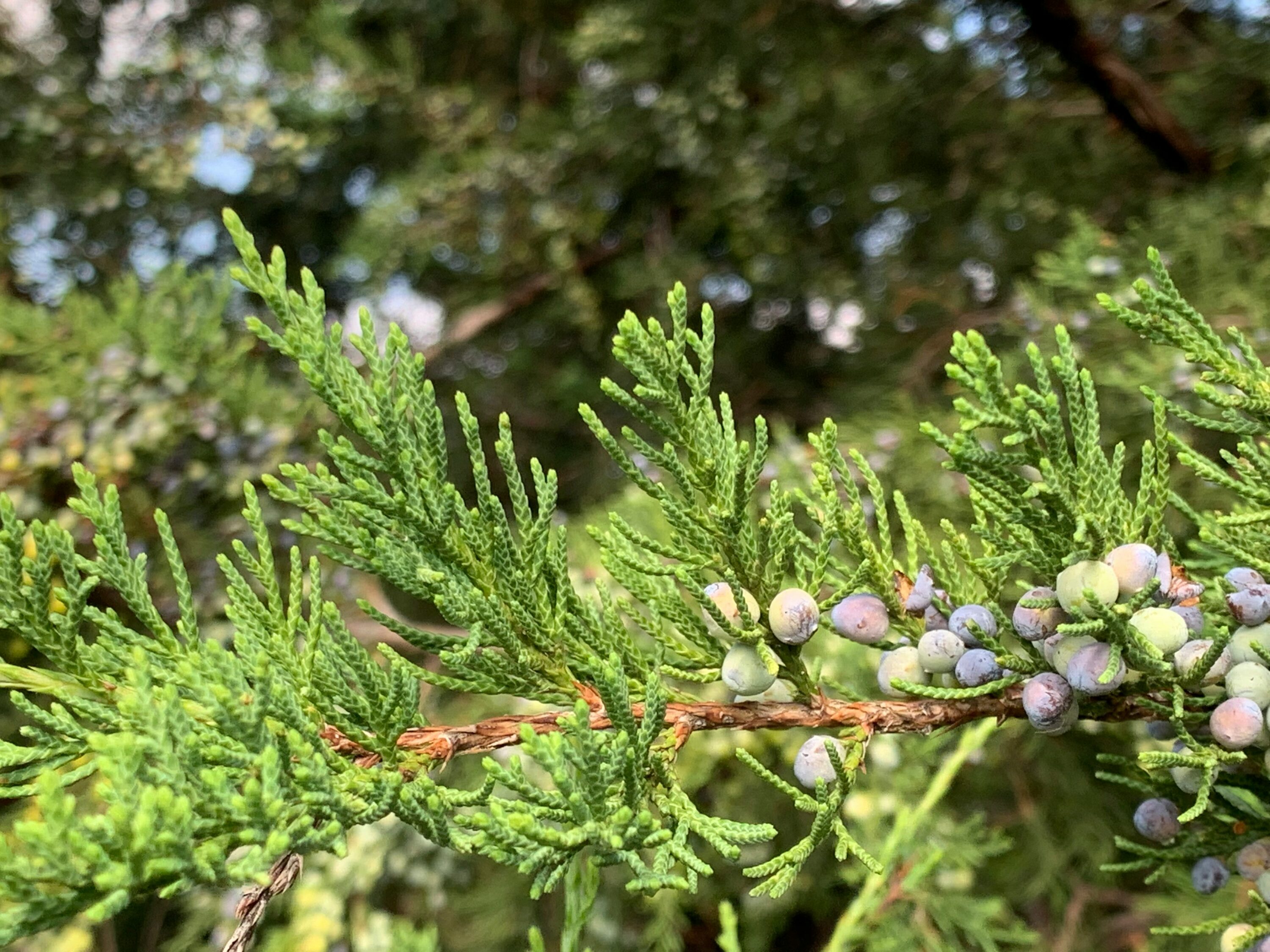
Eastern Redcedar- Juniperus virginiana is a coniferous evergreen tree in the cypress family. It grows in average dry to moist soil, well drained, and in full sun. It has the best drought resistance than any other conifer native to the Eastern US. It is the larvae host for the Juniper hairstreak and the Imperial moth. It is resistant to deer damage and provides habitat, cover, and food for wildlife. Various song birds and small mammals eat the fruits.
So stop by the Gateway Nature Preserve today to take a stroll in the woods and see how many native evergreens you can find! If you’d like you can use iNaturalist to upload your observations. Just upload the app, make an account, and as you walk in nature you can upload photos of your observations to help us keep track of what you see. This app is also useful to identify plants and animals.
Resources:
https://plants.ncwildflower.org/